
The British Museum Bill of 1900
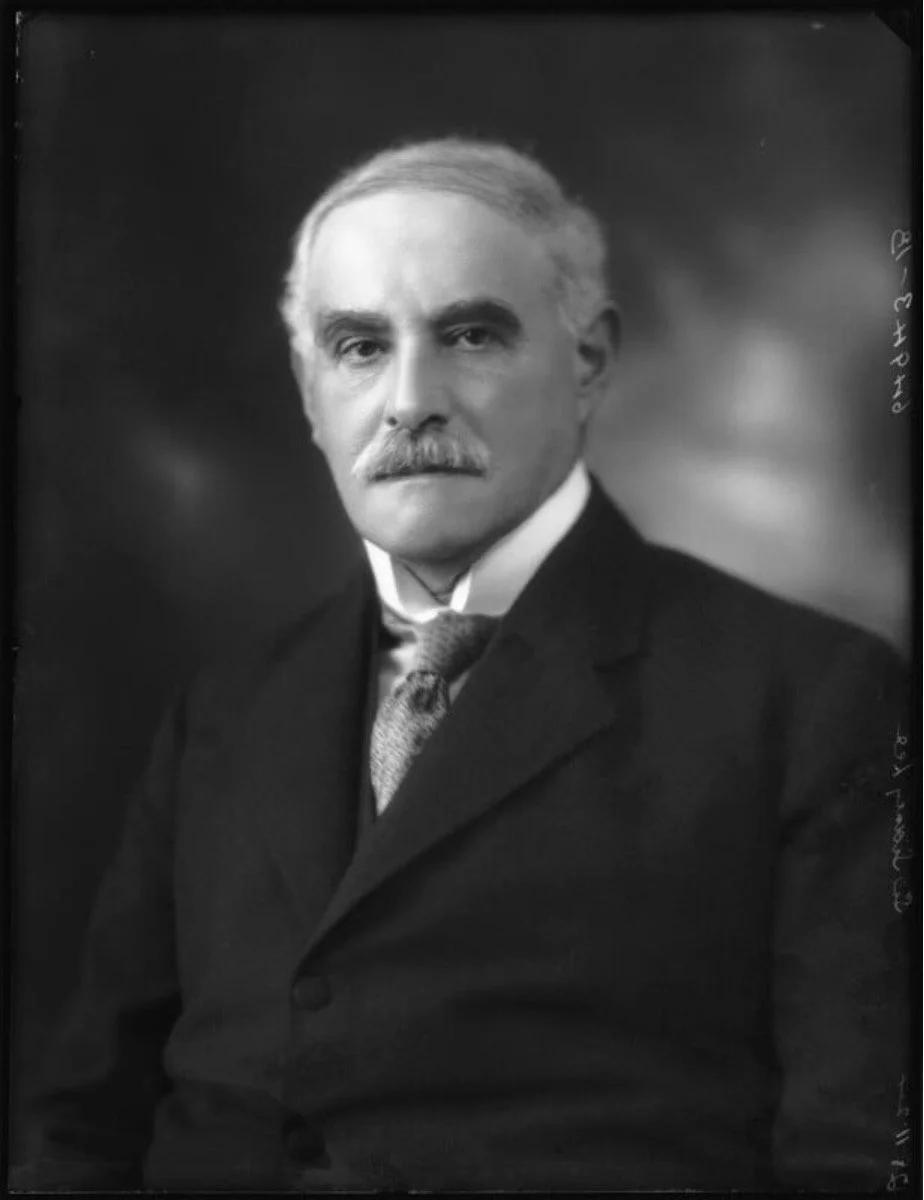
Image: ‘Sir Sidney Lee’, by Bassano Ltd. Whole-plate glass negative, 28 November 1924. NPG x123063. Copyright National Portrait Gallery, London. Reproduced under a CC BY-NC-ND 3.0 license.
This April marks one year of PromPrint!
To celebrate the occasion, I’ve decided, rather than giving an overview of what we’ve been working on, to write about one specific shadow object I’ve been thinking about: the British Museum Bill of 1900.
I call this a shadow object because it’s an unenacted piece of legislation—a bill rather than an act of parliament—and as such speaks to the project’s larger themes of absence and loss. But it’s also interesting to me as a shadow object that wanted to create shadow objects, because it’s a bill that sought to deal with the practical and ideological issues associated with copyright libraries in a straightforward way: by facilitating the destruction of certain types of texts received under deposit.
The bill presents the typical conflict between ideology (how we assess the value of printed texts) and practicality (how we store all printed texts—or almost all—once we agree that we can’t assess value reliably and so need legal deposit).
The full text of the bill is available via ProQuest U.K. Parliamentary Papers collection—with apologies for the paywall. It responds to a lack of space at the British Museum Library by proposing two things:
To move provincial newspapers away from the library, and
To allow the library to ‘dispose of valueless printed matter.’
What’s that? Valueless printed matter? I thought there wasn’t any such thing…at least if we believe in the principle of legal deposit? The word ‘valueless’ is used in the summary of the bill in Hansard, but in fact the full clause goes further: it demands the ‘disposal by destruction or otherwise of printed matter deposited in the British Museum which is not of sufficient value to justify its preservation in the Museum.’ This potentially dubious printed matter wasn’t just recent material from whatever genre was deemed suspect (spelling books are a favourite), it was anything published after 1660, with the decision to be made by the museum’s trustees.
Historian of deposit R. C. Barrington Partridge writes about the affair on page 104 of his History of Legal Deposit in the British Empire (1938). He argues that the bill was largely stopped thanks to the intervention of the man pictured above: Sir Sidney Lee, who wrote tothe Times about the bill on 4 May 1900, remarking, ‘it is beyond the capacity of human intellect to discriminate between what is valuable and what is valueless in the pursuit of historical research.’ How did Sir Sidney Lee know this? Because he was the editor of an invaluable cultural asset that depended crucially on the holdings of the British Museum Library and hence on deposit: the Dictionary of National Biography. Thanks be to Sir Sidney!